

Supplement Email Marketing
Brands are competing for consumers’ attention on search engines, social media, marketplaces, and paid advertising platforms in the fiercely competitive U.S. supplement market. In this context, email marketing for supplement brands can assist long-term retention and repeat business while building direct client interactions.
Email provides brands with an owned communication channel for educating subscribers, sharing product information, introducing specials, and sustaining engagement following a purchase, in contrast to advertising. For brands operating in the USA, this guide covers automation, campaign creation, performance optimization, and useful supplement email marketing tactics.
Why Email Marketing Matters For Supplement Brands?
Since purchasing decisions might entail research, trust, product knowledge, and continuous usage, email marketing is very beneficial for supplement firms. Instead of concentrating just on the initial purchase, a well-thought-out supplement marketing strategy can inform consumers throughout their engagement with a company.
Build Direct Relationships with Customers
Supplement companies can speak with individuals who have freely joined their mailing lists directly through email. In the absence of a dependence on social media algorithms or marketing tools, companies are able to share instructions, updates on products, usage details, company news, and offers.
Increase Repeat Purchases and Customer Lifetime Value
Customer retention is an important factor in the success of e-commerce operations because many dietary supplements tend to be repurchased. The e-mail messages may help in recommending similar products, reminding customers about previously purchased products, or providing useful information.
Educate Customers about Products and Ingredients
Prior to the purchase, a customer would want to know more about the ingredients, types of products, sources, serving suggestions, and much more. The email offers an opportunity for an in-depth discussion of all these aspects.
Reduce Reliance on Paid Advertising
While relying on paid advertising can make customer acquisition expensive, it can benefit in bringing in new clients. E-mail marketing becomes another way of communication for companies that sell their products through e-commerce channels.
Create Long-Term Customer Loyalty
Consistent and relevant communication will create greater levels of familiarity and trust. For maintaining relations across purchases, companies may use newsletters, educational materials, product launches, and other customer communications.
Loyalty to health and wellness brands frequently depends on factors other than promotional price. Instead of continuously pressuring consumers to make purchases, a successful supplement company email marketing strategy should make them feel informed.
How to Build an Email Marketing Strategy for a Supplement Brand?
A successful email marketing strategy for a supplement brand starts with understanding your customers and delivering relevant content at the right time. For supplement businesses targeting customers in the USA, a well-planned strategy can help build trust, encourage repeat purchases, and turn first-time buyers into long-term customers.
Define Your Target Audience
Start by identifying who your supplement brand is trying to reach. Consider demographics, customer needs, product interests, purchase behavior, and customer lifecycle. For example, a USA-based supplement brand may have different messaging for fitness enthusiasts, people interested in daily wellness, or customers looking for specific nutritional support. Understanding these differences helps you create more relevant campaigns and improve engagement.
Build a Permission-Based Email List
Focus on growing an email list through permission-based signups rather than purchasing contact lists. Add signup forms to your website, offer checkout opt-ins, and use lead magnets such as guides, educational resources, quizzes, or promotional offers to encourage subscriptions. For supplement brands targeting the USA, a quality email list provides a stronger foundation for building customer relationships and running sustainable email marketing campaigns.
Segment Your Subscribers
Not every subscriber has the same needs, so avoid sending the same email to everyone. Segment your audience based on products purchased, customer status, engagement, interests, and purchase frequency. For example, a supplement brand can create separate segments for first-time buyers, repeat customers, inactive subscribers, and customers interested in specific product categories. This makes email campaigns more relevant and can improve open rates, clicks, and conversions.
Personalize Your Email Content
Personalized emails can make supplement marketing feel more useful and less like generic advertising. Use information such as previous purchases, browsing behavior, product interests, and customer lifecycle to tailor your messages. A customer who recently purchased a supplement could receive helpful product-use information, while a repeat customer might receive a relevant replenishment reminder or offer. For USA supplement brands, this type of personalized communication can help strengthen customer relationships and encourage repeat purchases.
10 Email Campaigns Every Supplement Brand Should Consider
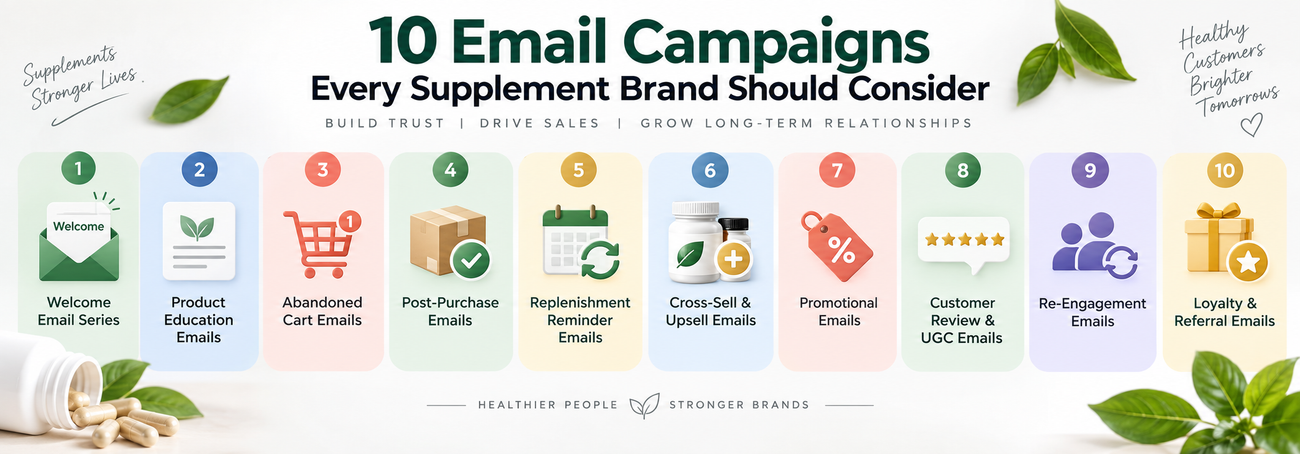
A strong email marketing strategy for supplement brands in USA should include more than occasional promotional messages. A mix of educational, automated, retention, and promotional campaigns can help USA supplement brands build customer trust, increase repeat purchases, and improve customer lifetime value. Netcliqs also recommends automated, personalized campaigns and audience segmentation as key parts of supplement email marketing.
1. Welcome Email Series
A welcome series introduces new subscribers to your supplement brand and sets expectations for future communication. Use the first few emails to explain your brand, highlight relevant products, share useful educational content, and provide a welcome offer when appropriate. For USA supplement brands, this is also a good opportunity to establish trust through clear, responsible messaging.
2. Product Education Emails
Product education emails help customers understand what makes a supplement different and how it fits their needs. Your educational content can explain ingredients, product features, usage information, certifications, or the differences between product options without relying only on sales-focused messaging. Educational emails can be especially valuable for USA supplement brands because consumers often research products before making a purchase.
3. Abandoned Cart Emails
Abandoned cart emails remind shoppers about products they added to their cart but did not purchase. A simple reminder followed by helpful product information or an appropriate incentive can bring potential customers back to the checkout page. For USA supplement stores, these automated emails can help recover sales without requiring additional advertising spend.
4. Post-Purchase Emails
The customer journey should continue after the purchase. Post-purchase emails can provide order information, product-use guidance, educational resources, and customer support details while building confidence in the brand. Later messages can invite customers to share feedback or explore relevant products.
5. Replenishment Reminder Emails
Many supplements are purchased repeatedly, making replenishment campaigns particularly useful for retention. Send a reminder based on the customer’s typical purchase cycle rather than using the same timing for everyone. Personalized replenishment emails can encourage repeat orders while making the buying process more convenient for customers in the USA.
6. Cross-Sell and Upsell Emails
Cross-sell emails can introduce products that complement a customer’s previous purchase, while upsell campaigns can highlight a higher-value or more suitable product option. For example, a customer who purchases one type of supplement may be interested in a related product or bundle. Use purchase history and customer interests to keep these recommendations relevant rather than sending generic product promotions.
7. Promotional Emails
Promotional emails can be used for product launches, seasonal offers, limited-time discounts, bundles, and special events. However, supplement brands should balance promotional messages with educational and relationship-focused content. For USA audiences, promotional claims should also be carefully reviewed for applicable advertising and health-claim requirements.
8. Customer Review and UGC Emails
Customer reviews and user-generated content can provide valuable social proof for supplement brands. Ask customers to share their experience after they have had enough time to use the product, and with appropriate permission, feature selected reviews or UGC in future campaigns. This can help potential customers feel more confident when evaluating your products.
9. Re-Engagement Emails
Some subscribers gradually stop opening or clicking emails. A re-engagement campaign can remind inactive subscribers about your brand, introduce useful new content, or offer a relevant incentive. Rather than repeatedly emailing inactive contacts, use engagement data to identify subscribers who may still be interested and refine your list over time.
10. Loyalty and Referral Emails
Loyalty and referral emails turn satisfied customers into repeat buyers and potential brand advocates. You can promote loyalty rewards, exclusive offers, referral programs, or early access to new products. For growing USA supplement brands, these digital marketing campaigns can support retention while encouraging existing customers to introduce the brand to new audiences.
Email Automation for Supplement Brands
The sending of pre-created emails based on what the clients do, their characteristics, or time is referred to as automation. Automated messaging works on a continuous basis once it has been put into place.
Welcome Automation
Welcome campaigns are used to familiarize new customers with the brand. This can include informing the customer about the range of products offered by the company, highlighting vital product categories, and providing valuable instructions for the future.
Abandoned Cart Automation
Emails about abandoned carts remind customers of items they considered about but decided not to buy. A simple reminder could be followed by more details about the product or a suitable reward.
Post-Purchase Automation
Emails sent after a transaction can validate the customer relationship and offer helpful details about the item that was purchased. Messages may contain information on similar items, product education, support services, or what consumers might expect next, depending on the brand.
Replenishment Automation
Since clients may buy products on a regular basis, replenishment emails are especially important for supplement firms. Instead of delivering the same reminders to everyone, brands can use purchase history to provide notifications about a suitable scheduled reorder time.
Win-Back Automation
Customers who haven’t made a purchase or interacted for a certain period of time are the focus of win-back campaigns. In addition to presenting relevant products, instructional materials, or exclusive deals, these emails can identify the client’s prior association with the company.
Customer Review Automation
Once there is sufficient time provided to the consumers to make use of the product, they can request reviews. Besides providing valuable feedback, the reviews can create social proof for future customers to evaluate products.
Automation allows brands not to be involved in each customer interaction by themselves; rather, they can send out automated messages in the wake of specific actions and intervals.
Email Segmentation Strategies for Supplement Brands
Email segmentation allows supplement brands to send more relevant messages to different groups of subscribers instead of treating every customer the same. For brands targeting customers in the USA, segmentation can improve engagement, personalize the customer journey, and make email campaigns more relevant to individual shopping behaviour.
Segment by Product Purchased
Group customers based on the supplements they have purchased so you can provide more relevant information and recommendations. For example, customers purchasing probiotics can receive different educational content from customers purchasing protein products. This approach also creates opportunities to recommend complementary products based on previous purchases.
Segment by Customer Lifecycle
Customers at different stages of their relationship with your brand need different types of communication. Create segments for new subscribers, first-time customers, repeat customers, inactive customers, and loyal customers. A new subscriber may need educational content, while a repeat customer could receive replenishment reminders, product recommendations, or loyalty offers.
Segment by Purchase Frequency
Purchase frequency can reveal how often customers typically need a product. You can create groups for occasional buyers, regular customers, and frequent purchasers, then adjust email timing and offers accordingly. For USA supplement brands, this can help create more relevant replenishment campaigns without sending unnecessary reminders to customers who purchase less frequently.
Segment by Customer Interests
Use signup information, quiz responses, browsing behavior, and previous purchases to understand what customers are interested in. Someone interested in sports nutrition may respond better to content about protein and workout support, while another subscriber may prefer general wellness or nutritional education. Interest-based segmentation helps supplement brands deliver content that matches customer preferences.
Segment by Email Engagement
Monitor how subscribers interact with your emails, including opens, clicks, purchases, and periods of inactivity. Highly engaged subscribers can receive new product announcements and special offers, while less-engaged subscribers may benefit from educational content or a re-engagement campaign. Regularly reviewing engagement segments can also help maintain a healthier and more responsive email list.
How to Create High-Converting Emails for Supplement Brands?
Clarity, relevancy, useful information, and a clear course of action are all key elements of a good email.
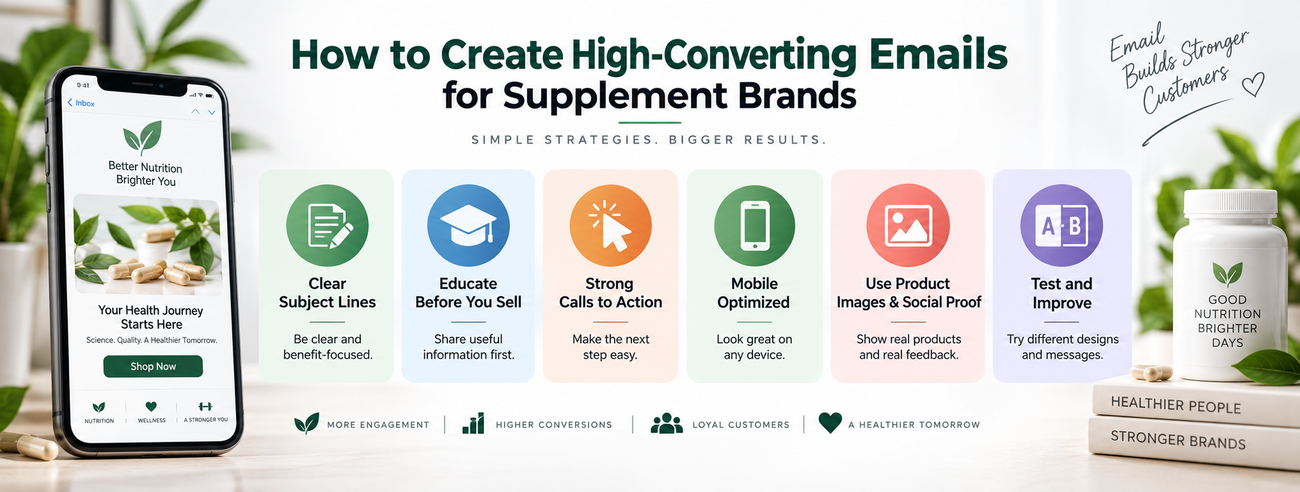
Write Clear, Benefit-Focused Subject Lines
Emails need to communicate their content in their subject lines. Supplement companies need not talk about exaggerated claims regarding the health aspects of their products; instead, they can focus on the features of the product, education topics, or consumer benefits. It would be easier for the subscribers to know the reason for the significance of the email from its subject line.
Focus on Education before Promotion
These questions relate to ingredients, product packaging and forms, serving suggestions, quality, and variations of products. These questions can be answered through educating the consumer, and the consumer will purchase the product in a knowledgeable way. Finally, these messages promoting the product need not seem like an advertisement in each message.
Use Strong Calls to Action
The goal of each email is supposed to be clear. It might encourage the readers to view a selection, read a how-to article, check out a product, complete a transaction or provide feedback. Clearly phrased language can help the subscriber understand what he needs to do.
Optimise Emails for Mobile Devices
Many people use smartphones for the emailing process. In fact, it is suggested that supplement companies should make use of responsive design, clear font type, short and clear content, appropriate size of images, and easy-to-tap buttons. It is necessary that landing pages should also be designed with the use of mobile-friendly design.
Use Product Images and Social Proof
It is easy for subscribers to recognize the items thanks to the high quality of product images. Customers can understand better from customer reviews, ratings, and other real social proof. The organisations have to ensure that there are no false claims made about the health benefits associated with the products.
Test Different Email Designs and Messages
Short forms, product-based emails, advertising campaigns, and educational newsletters can all create different responses among different groups of people. This can be figured out by brands through testing various elements such as design, content, subject line, call-to-action, and offer.
Email Marketing Compliance for Supplement Brands in the USA
Compliance should be an essential part of any email marketing strategy for supplement brands targeting the USA. Commercial emails must follow requirements under the CAN-SPAM Act, while marketing claims for dietary supplements must be truthful, not misleading, and supported by appropriate evidence.
Follow CAN-SPAM Requirements
USA supplement brands sending commercial emails should follow the requirements of the CAN-SPAM Act. This includes using accurate sender information, avoiding deceptive subject lines, providing a valid physical postal address, offering a clear opt-out method, and honoring unsubscribe requests promptly. These requirements apply to commercial email even when the recipient is an existing customer.
Use Accurate Sender and Subject Information
Your sender name, email address, and subject line should clearly represent who is sending the message and what the email contains. Avoid misleading subject lines designed only to increase open rates. Accurate and transparent messaging helps USA supplement brands maintain customer trust while meeting CAN-SPAM requirements.
Provide a Clear Unsubscribe Option
Every commercial email should give recipients a clear and easy way to stop receiving future marketing messages. The unsubscribe mechanism should be easy to recognize and use, and businesses must honor opt-out requests within the timeframe required by CAN-SPAM.
Avoid Unsupported Health and Product Claims
Supplement marketing requires particular care with health-related claims. Avoid promising that a product will treat, cure, prevent, or guarantee results unless the claim can legally be made and is adequately supported. The FTC states that health-related advertising claims must be truthful, not misleading, and supported by competent and reliable scientific evidence.
Be Careful With Supplement Benefits and Testimonials
Customer testimonials and endorsements do not remove a brand’s responsibility for the claims being communicated. A testimonial can still create an express or implied health claim, so supplement brands should ensure that testimonials do not make claims the brand could not substantiate directly.
For example, avoid using a customer testimonial that suggests a supplement cures a disease or guarantees a specific health outcome unless the claim is legally permissible and adequately substantiated.
Protect Customer Data and Consent
Email marketing also requires responsible handling of customer information. Collect subscriber data through transparent signup processes, explain how it will be used, and maintain appropriate security and access controls. Keep your email database organized so that unsubscribe requests and customer preferences are respected across your marketing campaigns.
Email Marketing Challenges for Supplement Brands in the USA
Some of the supplement brand email marketing challenges in the USA are mentioned below:-
Increasing Competition in the U.S. Supplement Market
Differentiation is becoming more and more crucial due to a wide range of supplement brands in the USA. For brands to be known to subscribers, they must provide consistent messaging and helpful content.
Rising Customer Acquisition Costs
The cost of attracting new clients may rise due to competition among digital advertising platforms. Brands may use existing relationships more effectively with retention-focused email marketing.
Building Consumer Trust
For health and wellness products trust is crucial. A better customer experience can be enhanced by accurate product descriptions, accountable claims, clear ingredient information, and reliable customer support.
Standing Out in Crowded Inboxes
Every day, subscribers could get a lot of promotional emails. Email campaigns can be made more obvious with the support of relevant segmentation, helpful content, clear branding, and careful timing.
Balancing Promotions with Education
If discounts are sent too often, subscribers may become less engaged and learn to wait for deals. Promotions are combined with instructional and customer-focused content in a well-rounded approach.
Best Email Marketing Metrics for Supplement Brands
Tracking the right email marketing metrics helps supplement brands understand what is working, where customers are dropping off, and which campaigns are contributing to revenue. For supplement brands targeting the USA, it is useful to look beyond opens and clicks and measure metrics connected to purchases, customer retention, and overall business growth.
Open Rate
Open rate shows the percentage of delivered emails that are opened by recipients. It can provide a general indication of how effective your subject lines and audience targeting are, although privacy features and email-client tracking can affect how accurately opens are measured.
Click-Through Rate
Click-through rate (CTR) measures how many recipients click a link or call-to-action within an email. A strong CTR generally indicates that the email content, offer, and CTA are relevant enough to encourage subscribers to take the next step.
Conversion Rate
Conversion rate measures the percentage of email recipients who complete a desired action, such as purchasing a supplement, signing up for a subscription, or completing another target action. This metric helps USA supplement brands connect email engagement with actual business outcomes.
Revenue Per Email
Revenue per email measures how much revenue an individual email campaign generates on average. It can help brands compare different campaigns and identify which messages, offers, or products are producing the strongest financial results.
Revenue Per Recipient
Revenue per recipient (RPR) measures the revenue generated for each recipient who received a campaign. Unlike simply looking at total sales, this metric helps account for differences in audience size and makes it easier to compare campaign performance.
Unsubscribe Rate
The unsubscribe rate shows the percentage of recipients who opt out after receiving an email. A rising unsubscribe rate may indicate that subscribers are receiving too many emails or content that does not match their expectations. Monitoring this metric can help supplement brands improve content relevance and email frequency.
Customer Lifetime Value
Customer lifetime value (CLV) estimates the total value a customer generates throughout their relationship with a brand. For supplement businesses, where products may be purchased repeatedly, improving retention and encouraging repeat purchases can have a significant impact on long-term customer value.
Repeat Purchase Rate
Repeat purchase rate measures how many customers return to purchase again after their initial order. It is particularly important for supplement brands because many products are consumed regularly and may naturally lead to repeat orders. Email campaigns such as replenishment reminders, personalized recommendations, and loyalty offers can help support repeat purchases.
How to Improve Email Marketing Performance?
To increase engagement, conversions, and customer retention, a strong email marketing plan requires ongoing testing and optimization.
A/B Test Subject Lines
Testing various subject lines can show which strategies result in higher engagement and open rates. Companies can compare instructional vs promotional viewpoints, length, wording, and personalization.
Test Offers and Calls to Action
To find out what promotes more clicks or transactions, brands might experiment with various incentives, calls to action, layouts, and messaging. When possible, testing should concentrate on a single variable at a time.
Improve Audience Segmentation
Not all subscribers share the same passions. Purchase history, product category, engagement, geography, customer status, and other pertinent data can all be used to create segments. Email marketing for supplement firms can become more relevant with improved segmentation.
Optimize Sending Frequency
Too many emails can lead to unsubscriptions while too few can decrease brand visibility. In light of audience habits and campaign success, brands must gauge their response and adjust accordingly.
Remove or Re-Engage Inactive Subscribers
Overall engagement numbers may be lowered by inactive subscribers. They may be given the chance to stay subscribed through a re-engagement campaign. The brand’s email management procedures may eventually result in the removal of subscribers who continuously show no interaction.
Analyze Customer Purchase Cycles
Campaign timing can be improved by knowing when customers usually place new orders. Brands can create more relevant replenishment reminders and retention strategies with the use of purchase-cycle data.
Email Marketing vs. Paid Advertising for Supplement Brands
Paid advertising and email marketing serve different roles in a supplement brand’s growth strategy. For brands targeting customers in the USA, paid ads can help bring new people into the funnel, while email marketing can nurture those prospects and build longer-term customer relationships. Instead of treating the two channels as competitors, brands can use them together to support acquisition, conversion, and retention.
Paid Advertising
Paid advertising is often used to acquire new customers and generate immediate traffic. Platforms such as search and social advertising allow supplement brands to target audiences based on demographics, interests, behaviours, and other signals. However, paid campaigns generally require ongoing advertising spend to continue generating traffic and new customer opportunities.
Key roles of paid advertising include:
- Customer acquisition: Reach potential customers who have not interacted with your brand before.
- Immediate traffic: Drive targeted visitors to product pages, landing pages, or promotional offers.
- Audience targeting: Reach specific audiences based on available targeting options.
- Ongoing advertising costs: Traffic generally depends on maintaining an advertising budget and managing campaign performance.
Email Marketing
Email marketing focuses more on retention, customer education, repeat purchases, and lifecycle marketing. Once customers or subscribers have given permission to communicate with them, brands can use email to deliver educational content, product recommendations, replenishment reminders, and personalized offers.
Key roles of email marketing include:
- Retention: Keep customers engaged after their initial purchase.
- Repeat purchases: Encourage customers to reorder products they regularly use.
- Customer education: Share useful information about products, ingredients, and related topics.
- Lifecycle marketing: Send different messages based on where customers are in their relationship with the brand.
- First-party customer relationships: Build direct communication with subscribers and customers rather than relying entirely on paid platforms.
Why Supplement Brands Should Use Both?
Successful supplement brands in the USA do not need to choose between paid advertising and email marketing. A stronger approach is to use paid advertising for acquisition and email marketing for conversion and retention.
For example, a USA supplement brand can use paid ads to introduce a product to a new audience, direct visitors to a website, and encourage them to subscribe or make a purchase. Once someone joins the email list, automated welcome, educational, abandoned-cart, post-purchase, and replenishment campaigns can help nurture the relationship and encourage future purchases.
Frequently Asked Questions about Email Marketing for Supplement Brands
Q1. Is email marketing effective for supplement brands?
Yes, Email can help with product discovery, customer education, retention, and repeat business. List quality, segmentation, content relevance, automation, timeliness, and continuous optimization all determine how effective it is.
Q2. What emails should supplement companies send?
Examples of email marketing of supplements are welcome emails, educational newsletters, product announcement emails, and reminder of abandoned cart emails, thank-you emails after purchase, restocking emails, request for reviews, promotions, and win-back emails.
Q3. How often should supplement brands send marketing emails?
No frequency can work for all companies. In the process of developing a schedule, companies need to consider preferences of their audiences, effectiveness of marketing campaigns, cycles of buying products, and levels of engagement.
Q4. What is the best email marketing strategy for supplements?
List building, segmentation, instructional materials, behavioral automation, personalization, promotions, and tracking performance are some of the elements that make up a good marketing plan. The goal should be to create good experiences for customers while ensuring that there is good sales retention.
Q5. How can supplement brands increase repeat purchases with email?
Use replenishment reminders, personalized recommendations, post-purchase emails, and loyalty offers to encourage customers to reorder.
Q6. How can supplement companies stay compliant with email marketing?
Follow CAN-SPAM requirements, provide clear unsubscribe options, use accurate information, and avoid misleading or unsupported health claims.
Q7. What email automations should a supplement brand have?
Key automations include welcome, abandoned cart, post-purchase, replenishment, review, cross-sell, and re-engagement emails.
Final Thoughts: Building a Profitable Email Strategy for Your Supplement Brand
One acquisition channel shouldn’t be the primary focus of a good supplement marketing plan. Email can help US supplement firms maintain a relationship with their clients while promoting education, conversion, retention, and repeat business.
Brands may create a more consistent consumer experience by integrating ethical communication, smart Email Marketing for Supplement Brands in USA, and ongoing testing. The long-term potential for supplement companies in the USA is found not just in attracting new customers but also in establishing connections that promote knowledgeable, recurring involvement.